Extreme Heat
Heat is the number one weather-related killer in the United States, resulting in hundreds of fatalities each year. In fact, on average, extreme heat claims more lives each year than floods, lightning, tornadoes, and hurricanes combined.
Heat Illness Symptoms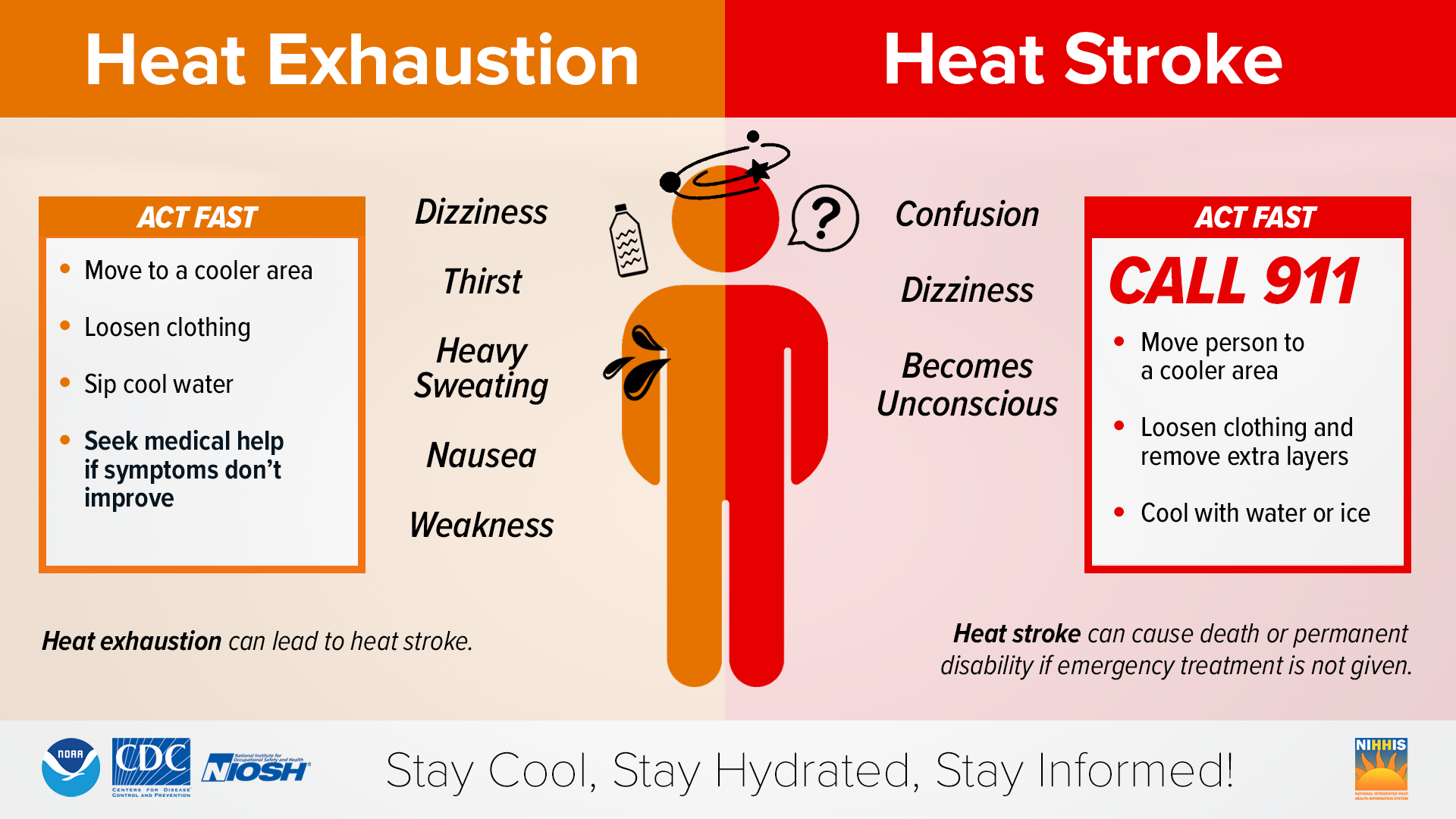
During extremely hot and humid weather, your body's ability to cool itself is challenged. When the body heats too rapidly to cool itself properly, or when too much fluid or salt is lost through dehydration or sweating, body temperatures rise, and you or someone you care about may experience a heat-related illness
Heat illness can set in quickly. Heat cramps are often the first sign. If steps are not taken, this can lead to heat exhaustion and even heat stroke. Heat Stroke is a serious medical emergency. Be aware of these symptoms and seek medical attention if needed.
- Cramps or muscle spasms
- Heavy Sweating
- Dizziness
- Thirst
- Nausea or Vomiting
- Weakness
- Weak Pulse
- Confusion
- Becomes Unconscious
Using a fan to blow air in someone’s direction may actually make them hotter if heat index temperatures are above the 90s. Click here for more heat illness tips.
Heat, Cars, Children & Pets
Studies have shown that the temperature inside a parked vehicle can rise rapidly to a dangerous level for children, pets, and even adults. Do not leave children or pets in an enclosed vehicle during extreme temperatures.
- Leaving the windows slightly open does not significantly decrease the heating rate.
- The effects can be more severe on children and infants because their bodies warm at a faster rate than adults.
- Each year, children and pets die from hyperthermia as a result of being left enclosed in parked vehicles.
- Hyperthermia is an acute condition that occurs when the body absorbs more heat than it can dissipate. This can occur even on a mild day.
- Check to make sure seating surfaces and equipment (child safety seat and safety belt buckles) aren't too hot when securing your child in a safety restraint system in a car that has been parked in the heat.
- Never leave your child or pet unattended in a vehicle, even with the windows down.
- Teach children not to play in, on, or around cars.
- Always lock car doors and trunks - even at home.
- Keep keys out of children's reach. Always make sure all child passengers have left the car when you reach your destination.
- Don't overlook sleeping infants.
